Updated: August 2, 2026
Introduction
In this interview: “Americans invariably described their new polity, not just as a republic, but also as an empire… They used the word empire over and over and over again.
Watch this segment in the video below (00:10:01)
America was founded as a republic. So why did early Americans repeatedly describe it as an empire?
Was America’s rise unique? Or did it follow patterns seen throughout history?
What did Rome, Britain, Qing China, Spain, France, and the Dutch Republic have in common?
Can constitutions create great powers? Can they preserve them?
And how do great powers recognize that they are beginning to decline?
In this interview, Dr. Steven Pincus places the American experience within a much broader historical framework. Rather than treating the United States as an isolated case, he compares its rise with other great powers across history, explaining how institutions, constitutional design, economic strength, military power, and political self-criticism shaped both the emergence and the endurance of powerful states.
Video
Watch the full interview with Dr. Pincus (timestamped outline below)
Key Themes
- America’s Rise in Historical Context
- Constitutions and Great Power
- Empire Versus Nation-State
- The Dynamics of Imperial Decline
- Historical Patterns and American Exceptionalism
Central Question
Was America’s rise to great-power status historically exceptional, or did it follow patterns shared by earlier empires and republics?

How to Use This Post
Use this post as reference guide to the American Revolution through the lens of this interview and the broader Analyzing American Revolution program (AARevolution). Navigate using the interactive table of contents above and the timestamps below (in gray) to discover how this interview deepens the story of the Revolution—and to explore how the program unfolds: its key themes, insights, image gallery, scholars list, history quizzes, and related interviews across the series.
America’s Rise Was Rare—But Not Historically Unique
America’s emergence as a great power did not occur in isolation. As Dr. Pincus argues in this interview, our Founders themselves viewed their new republic within a broader historical and global context, comparing their experience with earlier powers and studying the successes and failures of other political systems.
Example we review include the Roman Republic, Britain, Qing China, Spain, France, and the Dutch Republic. From them, Dr. Pincus argues that America’s development followed recognizable historical patterns rather than representing an unprecedented exception.
At the same time, he emphasizes that America’s success was rare. Throughout history, most states born from revolutions or civil wars ultimately failed, making the survival and growth of the United States remarkable without requiring it to be historically unique.
About My 204th Guest: Dr. Steven Pincus
Dr. Steven Pincus is a professor of British history at the University of Chicago. He is a historian of Britain and its Empire, comparative revolutions and comparative empires, political economy, European ideas and Europe’s cultural history of 17th & 18th centuries.
Dr. Pincus has published extensively on these subjects, including the following books:
- The Heart of the Declaration: The Founders’ Case for Activist Government,
- The Politics of the Public Sphere in Early Modern England: Public Persons and Popular Spirits,
- 1688:The First Modern Revolution,
- England’s Glorious Revolution 1688–1689: A Brief History with Documents
- A Nation Transformed: England after the Restoration
This is Dr. Pincus’s second appearance on this program. In our first interview (S1E7 AAR), we discussed “How Britain’s Imperial Modernization Shaped the American Revolution“.
 books by Dr. Pincus
About This Post’s Featured Image
Image of Adel Aali (program host) and his guest, Dr. Steven Pincus, superimposed on the Betsy Ross flag, along with an 18th century map of the world in which the 13 American states are highlighted.
Unless otherwise indicated, all images in AAR—including those in this post—are in the public domain.
AAR Essential Insights
Although the full video and transcript of my conversation with Dr. Pincus are included in this post, I’ve selected and summarized several insights that I found particularly revealing and worth emphasizing. These moments — some surprising, others that challenge familiar assumptions — help us see America’s rise to great power and the American Revolution in a different light.
By the way, these insights are my own takes and interpretations from the interview. For Dr. Pincus’s perspective and exact framing, please watch the interview above and view the transcript below in the corresponding sections.
The American Revolution Was a Global Event with Global Aspirations
The American Revolution did not begin as an isolated dispute between Britain and thirteen colonies. From the outset, British Americans saw themselves as participants in a much larger imperial world. They followed events across the British Empire, debated policies that stretched far beyond North America, and judged Britain’s conduct not only at home but overseas.
The Boston Tea Party is a powerful example. As Dr. Pincus explains, the tea itself was only part of the story. Many colonists associated the East India Company with its governance of Bengal and the catastrophic famine that followed. Their protest was directed at an imperial system they believed had abused its power on a global scale.
That perspective also helps explain what came next. If the Revolution began within a global context, it is hardly surprising that the new republic quickly developed global aspirations of its own. The Founders were not simply trying to survive. They intended for the United States to take its place “among the nations of the earth,” participating in an international order rather than withdrawing from it. That broader vision is easy to miss when we study the Revolution only through the lens of local events.
Watch this segment in the video above (03:55)
Would America’s Founders Support Isolationism?
Continue watching at 47:35 in the video above
America’s Rise Was Rare, Not Exceptional
One word changed the way I think about America’s rise: rare.
We often hear that the United States was historically exceptional—a nation unlike any that came before it. Dr. Pincus offers a more nuanced argument.
America’s rise was not without precedent. Other states, including the Roman Republic and Qing China, also emerged from periods of upheaval and became great powers. The Founders understood this. They studied earlier republics and empires, searching for both successful models and cautionary tales.
What makes the American experience remarkable is something different.
History is filled with revolutions, civil wars, and newly independent states. Most never became stable great powers. Many collapsed within a generation. America’s achievement, then, was not that it broke every historical pattern. It was that it successfully navigated patterns that had defeated so many others.
That distinction matters. Calling America rare instead of exceptional does not diminish its success. It places the nation’s story within the broader history that its own Founders studied so carefully—and reminds us that they believed history was a guide, not merely a backdrop.
Watch this segment in the video above (17:03)
Great Powers Rise on Institutions—and Survive by Them
When we hear the word constitution, most of us immediately think of a written document. This interview argues for something much broader. A constitution is also a system of institutions, governing principles, and shared expectations that explain not only how a state is governed, but why it deserves to be governed.
That distinction changes how we think about great powers. Military victories may expand a state. Economic growth may enrich it. But neither is enough to sustain it over generations. Governments must continually persuade the public that the political system is worth preserving—that taxes serve a purpose, institutions are legitimate, and the state ultimately improves the lives of most of its people. Without that continuing legitimacy, even the most powerful empires become fragile.
I also found it striking that this idea extends far beyond written constitutions. Throughout history, many of the world’s most durable empires operated without a single constitutional document, yet they still depended on widely understood rules, institutions, and principles of governance. The form differed. The underlying challenge remained remarkably consistent.
Watch this segment in the video above (21:51)
Great Powers Discuss Decline Long Before They Decline
One of the most counterintuitive ideas in this interview is that conversations about imperial decline are not necessarily signs that an empire is collapsing. On the contrary, they may be signs that the empire is adapting, reforming, and renewing itself.
For example, the British openly worried about decline decades before reaching the height of their imperial power. Edward Gibbon’s “The History of the Decline and Fall of the Roman Empire” and Adam Smith’s “The Wealth of Nations” both appeared in 1776, and many readers understood them as anxieties about Britain’s own future. Yet Britain’s greatest imperial expansion still lay ahead. Beyond their historical and economic analyses, these books were hugely influential because they helped spark a much broader public debate about the empire’s future.
The same pattern repeats itself across history. Whether in Britain, France, Spain, or elsewhere, critics were often calling for reform rather than surrender. They argued that institutions needed to adapt, governments needed to innovate, and political systems needed repair. In that sense, debates about decline were not expressions of defeat. They were arguments for renewal. History suggests that self-criticism can be one of a great power’s greatest strengths—provided it leads to meaningful change rather than paralysis.
Watch this segment in the video above (36:21)
Would America’s Founders Recognize America Today?
It is always tempting to ask what the Founders would think of America today. But the more interesting question is why they created the United States the way they did.
As Dr. Pincus explains, the Declaration of Independence was not simply a declaration of separation from Britain. It was also an indictment of political practices the Founders believed had corrupted the British Empire. They sought to create a republic that would remain engaged with the world without becoming isolationist, restrain executive power rather than concentrate it, and prevent the kind of oligarchic inequality they believed had undermined Britain’s constitutional order.
What struck me most is that these concerns were not abstract political theories. They were practical lessons drawn from history. The Founders believed they had identified the forces that caused republics and empires to lose their way. Whether we agree with their conclusions or not, many of the debates that define American public life today are remarkably similar to the debates they were trying to resolve 250 years ago.
Watch this segment in the video above (47:27)
The Interview (S1E27): Adel Aali and Steven Pincus
In our conversation, Dr. Pincus addresses key questions about America’s rise to a great power, how it compares it other empires in history, and the American Revolution. The detailed outline and full transcript below supplement the video above.
Podcast
Watch the full interview on this page with the outline and transcript below, or take the conversation with you on the go through our Spotify podcast.
Outline
Use the in-depth outline below, with its key moments and turning points, to follow the discussion and navigate the interview.
Click for Timestamped Outline
- Selected Highlights (00:00)
- Guest Introduction (01:50)
- Thinking Beyond the Colonies (03:55)
- British Americans in a Global Empire (04:13)
- The Boston Tea Party and the East India Company (05:09) – Key Moment (07:06)
- Did the Founders Envision a Great Power? (07:56)
- America “Among the Nations of the Earth” (08:27)
- Why Early Americans Called Their Republic an Empire (10:01) – Key Moment (10:23)
- From Vulnerable Republic to Emerging Empire (11:18)
- John Jay and the Fear of European Intervention (11:37)
- Population Growth and America’s Economic Potential (13:33)
- How Great Powers Are Built (14:52)
- Military Strength, Economic Power, and Constitutional Innovation (15:31)
- America’s Rise Compared with Rome, Britain, and Qing China (17:00) – Turning Point (17:23)
- Why America’s Rise Was Rare, Not Exceptional (19:00)
- Lessons from the Dutch Republic and the Roman Republic (19:59)
- Why Most Revolutionary States Collapse (21:22)
- Can Constitutions Sustain Great Powers? (22:03)
- Why Empires Need Public Support (22:31)
- The Meaning of Constitutions Beyond Written Documents (23:51)
- Does Every Great Power Face Decline? (26:48)
- International Order, Informal Rules, and Great-Power Competition (28:01)
- How New Powers Reshape Global Equilibrium (33:57) – Turning Point (34:31)
- How Great Powers Recognize Decline (36:21)
- Britain, Edward Gibbon, and Adam Smith (36:46)
- Why Self-Criticism Can Lead to Renewal (41:09) – Key Moment (42:56)
- America at 250: What Would Surprise the Founders? (47:27)
- Isolationism, Executive Power, and Inequality (47:49)
- Polarization, Reform, and Historical Perspective (56:10) – Turning Point (58:26)
- Can Republics Endure as Great Powers? (59:35)
- Moral Responsibility and International Leadership (01:00:38)
- Why the Roman Republic Still Matters (01:03:39)
- Just One Point (01:06:29)
Transcript
Note: This transcript was generated automatically and may contain minor errors. It is provided for reference and accessibility only.
Click to View Transcript
Adel:
Dr. Peng, it’s a pleasure to have you on our program again. Thank you for taking the time for this conversation with me. Let’s start our conversation with this question.
During the American Revolution and the years that followed, where are founders thinking in continental or even global terms, or were they primarily concerned with just survival?
Dr. Pincus:
Yeah, I mean, I think they were always focused on the kind of global context. And obviously, different people had different attitudes. But we know that they were focused on the global context.
I mean, first of all, it’s important to remember that every single American was a British American before they were an American. That’s right, yeah. And as a result, they were reading in their local newspapers, whether it was the Pennsylvania Gazette or the Boston Gazette or the South Carolina Gazette, many accounts of what was going on throughout the British Empire.
So they were extremely well aware. And I think if we were at all doubtful about this, the Boston Tea Party shows without question how extremely alive they were to developments elsewhere. So the Boston Tea Party, I mean, obviously a seminal event in the textbook account of the run-up to the American Revolution, what happened was that a bunch of guys in Boston threw a bunch of tea into the harbor.
But what’s most important is that it was East India Company tea. And why were they so upset with the East India Company? Well, they were so upset not because the East India Company was charging exorbitant prices for the tea.
In fact, if anything, they’d lowered the price. But it was because of what the East India Company stood for. And what they stood for in the previous several years, the East India Company’s governance of Bengal or the wealthy provinces of Bengal had been nothing short of disastrous.
It had provoked the Great Bengal Famine of 1768 to 1772, in which over 3 million people died. Just to put this in context, the entire population of British North America in the period was about 3 to 4 million people. So this was huge.
And this was well known up and down the eastern seaboard. So one of the most popular denunciations of the East India Company and East India Company tea, a publication called The Alarm, detailed and spelled out for North American readers the consequences of the Great Bengal Famine. The number of people who died, the amount of misery there was, but also pointed the finger directly at the British East India Company for having been responsible for this unprecedented famine.
So the reason why the tea was thrown into the harbor was absolutely because British Americans were furious about the policies of the East India Company in India. So I think that shows without question that these guys had a global vision and were able to marshal significant popular support for taking issue with Britain’s imperial policies at a global, not just a local scale.
Adel:
Okay, that’s really fascinating. I haven’t thought of the Boston Tea Party in sort of the global context of the British Empire and the American colonists’ criticism and protest of that. So if that’s the case, if Americans before the revolution, during the revolution, after did in fact think in the global context, then were there signs during those years or even during the discussions drafting the U.S. Constitution that any clues, any signs that America might one day become a global power?
Dr. Pincus:
Well, from the beginning, the Americans knew that they were part of a global system, right? I mean, the Declaration of Independence talked about having the newly independent republic as being part of, among the nations of the earth, right? I mean, so that there was a kind of global awareness from the beginning.
And, you know, there was obviously concern. I mean, the initial, I mean, John Jay in the Federalist Papers and the Federalist sort of enunciated concerns for the role that America would play in the world. But I mean, the concern that John Jay expressed in the Federalist was obviously the concern that Europe would carve up, European powers would carve up the newly independent republic.
The reason why he was worried about this is precisely because of a realization of just how prosperous British North America was. So there was both a fear, right? A fear that Europeans would intervene, would carve up, but also an optimism that if this were prevented, a newly independent republic could be prosperous and wealthy and play a prominent role among the nations of the earth, among the powers of the earth in this sort of way.
And it’s important to realize that in the immediate aftermath, in the immediate celebrations of year after year of the signing of the Declaration of Independence, Americans invariably described their new polity, not just as a republic, but also as an empire.
Adel:
Did they use that word empire?
Dr. Pincus:
They used the word empire over and over and over again.
Adel:
Oh, wow. Okay. Well, that is fascinating, Dr. Pingus. Let me just backtrack to something you said. You said John Jay, who was involved in writing one of the, I think, four writers of the Federalist Papers. There were four, right?
I think there were four. And then he was also present during the Paris Peace Treaty.
Dr. Pincus:
John Jay was in there.
Adel:
Exactly. Later, I think he goes on to the Supreme Court. So he is concerned that this new republic may be carved up into different independent states by European powers.
That concern was there. So this is the question. I set the stage based on what you had said.
This is the question. So at what point does America, and they’re already using the word empire, right? So at what point does it begin to look less like a vulnerable republic and more like an emerging great power, since they think they’re an empire already?
Dr. Pincus:
Yeah. Well, so, I mean, there’s a weird sense in which I think one could hold both of those thoughts simultaneously.
Adel:
Simultaneously?
Dr. Pincus:
Simultaneously. And I think that that’s true. I mean, I think that that was true of most polities.
That is to say, I mean, just to take, for example, I’m in the French Revolution. I mean, the French thought that they were had this, you know, in the 1790s, they thought they understood that they had these very powerful armies, et cetera, et cetera. But they also felt that they were extremely vulnerable.
They were extremely vulnerable to royalist intrigue, all sorts of things. And I think it’s important to understand that Britain in the middle of the 18th century, and here I think is the most important parallel, is they thought simultaneously that Britons in the middle of the 18th century thought simultaneously that they were extremely vulnerable to attacks from the French, from the Spanish, across the world. And that were they able to fend off those attacks, they would make themselves, you know, one of the great powers of the world.
So I think it’s important to realize that people held both of these thoughts, that they thought that, and I think they’re almost contingent upon one another, that there’s a sense of always being vulnerable and having the potential to be a world power. And I think it’s the perception, the balancing off of the perception of vulnerability, and it’s the perception of vulnerability which I think makes it necessary never to have political stagnation, because it’s always a possibility of improving, always sort of in danger. But I think there’s always a sense of the potential for economic power.
So I think, I mean, I think from the beginning of the Revolutionary War, I think people like James Madison and John Jay and Alexander Hamilton, they all had a sense that, you know, British America was extremely vibrant. Its population had been doubling every 20 years. That was an incredible index of economic vitality.
Adel:
Yeah.
Dr. Pincus:
Being there. But they also had a sense that, you know, they didn’t yet have a kind of coherent polity that could, you know, defend itself against being carved up. I mean, just because it was so economically vibrant, it also made it, you know, a rich target for other powers, that is to say, you know, it was territory worth holding.
Adel:
As you were explaining this duality of feeling vulnerable and also feeling like you are or you may be potentially a great power, and you gave examples of Britain in the 18th century and also France after, particularly after this revolution in 1789. Then you said, you know, this is grounds also to make sure you don’t get politically stagnated or stagnation or the rise to an economic power. What I thought of, I wasn’t planning on asking this question, but I just thought of this also, I don’t know if this applies to America in the 19th century, but for other countries, this may also build momentum or be an impetus to build up your military, which in turn gives you the power now to expand because you have the military.
You feared, you build a military, now you become a great power because you’re fighting wars.
Dr. Pincus:
No, no, absolutely. And I think, I mean, absolutely. And I’m going to just to sort of tell the story, I mean, to bring the story a little bit back concretely to Britain, right?
Britain built up its navy precisely because it was fearful in the 17th, in the late 17th century, that France under Louis XIV was seeking what they called universal monarchy. So the fear was that France was trying to become hegemonic, was trying to, and that was the impetus behind building up the British navy, which was absolutely essential for creating a British empire. So I think there’s no question, I mean, and it’s, but it’s not, I mean, and I think it’s useful to focus on the military, but I think it’s also important to realize that this leads to various forms of constitutional innovation and potentially economic innovation too, right?
I mean, that is to say wars cost money, right? So if you want to, if you want to fend off great, great powers, you have to have a vibrant economy, not only a vibrant economy, but a vibrant economy in which the state has some capacity of tapping into that vibrancy. So that requires something of a constitutional design as well.
Adel:
That’s a really interesting question. It’s an interesting point that you’re raising. I’m going to ask about that in a moment, about particularly about constitutions and institutions in general.
But before I go there, I want to ask this. Okay. You mentioned, we talked about France and Britain.
Was America’s rise to power exceptional or did it broadly follow historical patterns of other empires?
Dr. Pincus:
Yeah, I don’t think…
Adel:
And that comes to mind, Dr. Pincus, because you mentioned constitution. You see how that would trigger that question?
Dr. Pincus:
Yeah, yeah. No, absolutely. No, look, I don’t think it was exceptional.
I think it was rare, rare, not exceptional. I mean, one can think about the rise of the, you know, of the Roman Republic to sort of great power status, right? I mean, it was one among many polities in Italy.
You could say at a particular moment in time, there’s no reason to believe that the Romans and not, you know, any of their neighbors would become sort of a great hegemonic power. That it did so had to do in part with constitutional design, right? I mean, that they had a unique design of a republic, which had created sort of buy-in among the population, but it also had to do with the effectiveness of the Roman legions, building up the Roman army.
So, I mean, I think you could tell the story over and over again. I mean, that is to say, you could argue, you know, the creation of Qing power in China after the Ming-Qing transition, the 17th and 18th centuries. You could say, oh, well, that was basically a civil war in China.
The Qing were relatively vulnerable. How did they manage to become so powerful? Well, they managed to, because of a certain kind of constitutional design, an ability to finance relatively huge armies in various ways that didn’t lead to internal revolts.
So, I mean, I think that there’s a kind of, there’s a number of examples of polities being formed through civil war or revolution, which become great powers. But that said, the fact that one can draw various parallels doesn’t make it usual or normal. Most polities that come out of revolutions or civil wars don’t end up becoming great powers, right?
In fact, probably I would venture to guess if one were to create a data set of all human history, the vast majority of polities created out of civil wars ultimately collapsed or collapsed very quickly. So, I don’t think it’s diminishing the importance of the American case to say that it’s not exceptional, that there were other patterns in human history, other models in human history. I think just reading the text created by Americans at the time, reading the Federalist, it’s remarkable how many historical parallels, how much they’re focused on sort of thinking about historical parallels, both about patterns not to be followed, right?
I mean, Madison famously talked about another polity created through civil war and a revolutionary war of independence, the Dutch polity, right? Yeah, yeah. Called the state that it was created imbecilic, right?
I mean, so in other words, he said, he celebrated the Dutch for having fought a war of independence, a successful war of independence against the Spanish empire, but said that their constitutional design ultimately failed them, right? I mean, it was that was meant by imbecilic. So, but I think it’s important to realize that America’s founders were extremely conscious of the fact that there were parallels, that there were other historical examples, not least of which was the Roman Republic or the creation of the Roman empire.
But they saw those both as, you know, reasons to believe that they could succeed and also was warnings about dangers, dangers to be avoided.
Adel:
So, because there are historical parallels and they were cognizant of that, and you share some of those parallels with us, the rise of the early Republic to a great power status was not exceptional, but because of all the other polities that emerged out of civil wars and wars of independence and failed, it is rare, not exceptional, but it is rare, I guess. Okay. We talked about constitutions, constitutional innovations, that’s the term you used in particular, and how they could help give rise to a nation.
It also creates systems in which you can finance wars, you can finance economies, build an economy. So, okay, I get that part, the emergence, the rise. Do institutions and constitutions also sustain an empire?
Or does, like when they reach that great power status, do constitutional institutions become sort of not as relevant? What happens then?
Dr. Pincus:
No. I mean, I think they remain relevant. I mean, I sort of take inspiration for what I still think is one of the great sort of books of comparative history, Paul Kennedy’s book, The Rise and Fall of Great Powers.
And that, I mean, he called it great powers, but he could easily have called it the rise and fall of great empires. Yeah. And the point of his book is that powers rise, they become, when they can convince, when the polity, the government, whatever it is, can convince most of the people over which it is governing, that the constitution of the polity is improving the lives for the vast majority of people, as opposed to some other alternative.
Right. And empires are, you know, sort of the rise of great powers, let’s call them empires. They all have constitutions, right?
They all have constitutions, rules for forming the government. And I mean, because empires throughout human history have been the sort of longest lasting form of government, it’s worth studying those. And they all have constitutions.
They don’t call them constitutions. They’re not necessarily written constitutions in the way we think of. But most people, well, most people in the 18th century, the era of America’s founding, were talking about constitutions.
They didn’t think just of written constitutions. They thought of the organization of institutions, formal or informal, as a constitution of the government. So in my view, constitutions are always established with some kind of principles of governance, of the goals of what the state should be doing, what the polity should be doing.
Just to put it kind of crudely, all states depend on some form of taxation, some form of reparation. And all states have to, to get people to pay taxes, have to explain why it is that paying those taxes is necessary. Why it will better their lives.
Now, at the most basic level, right, polities will say, well, you know, we need to be able to defend you from, you know, the guy, you know, right across the border, right? So defense is obviously a minimal concern, but usually polities make much broader claims that they’re not only going to defend you against being attacked, raped or pillaged by the guy over the border, but also that in some ways paying your taxes will provide public goods, public benefits that will make the lives of everyone better. Now, you know, over the course of human history, most states have tended to support, to do this by supporting, let’s call them elites in various ways or another.
And with the notion that the elites will then distribute these public goods downwards. But other states have sort of wanted the state to sort of more directly create public goods to the sort of mass of the population. But in general, empires or states of any kind survive if, I mean, there are two claims.
One is that they need to protect the constitution of whatever that state is and whatever people understood this constitution to be. And secondly, there has to be, continue to be a notion that the constitution of that state would be in fact improving the lives or making lives better for the vast majority of the population. Now, obviously it’s the vast majority, not the entire population.
There will always be people who are losers, right? I mean, we do, but it’s the vast majority of the population. Okay.
Adel:
So far we’ve kind of, even though we have discussed the global context of empires and including the United States of America, we’ve sort of talked about that from the domestic angle, like, you know, the rise. I’m going to complicate this by asking this question. An empire is pushing out and it very quickly has international issues, conflicts, relations.
And for it to have that great power status, it must exert some, create systems and exert power through those systems, whether they’re diplomatic, financial or military. So this is the question I have for you, Dr. Pengas. Does an empire at some point become sort of, and I’ll choose this word, does an empire at some point become a prisoner of the international system itself has created?
It’s like it created a machine and now it’s part of that machine.
Dr. Pincus:
Yeah, yes. I mean, so let me take a step back by sort of explaining two things. One is what I mean by an empire is a state which is governing over different people differently, right?
It doesn’t claim homogeneity, right? So the difference between an empire and a nation state is a nation state imagines a relatively homogeneous population, right? That is to say, the state governs over a nation of people who are all alike.
An empire says there’s a polity governing over different kinds of people. There’s a kind of pluralism associated with it. Now, all states, whether empires or nation states, aim to project power outwardly.
And as you say, they can project power outwardly through military force, but more commonly through financial or commercial means, right? Yes. And that inevitably involves conflicts, right?
I mean, inevitably involves conflicts. Not all of those conflicts are military. Most of those conflicts are not military.
Most of those conflicts are commercial or financial. So that’s one thing. At no point in human history, I think, did any single empire or any single hegemon really create a world system, right?
There’s always competitors. There are always other people. And what needs to sort of understand is, I mean, what people call international relations, what I would prefer to call interstate relations, is always there are no formal rules, right?
So in the United States, we have a constitution, which is a formal set of rules about how we are going to be governed. In the interstate system, right? I mean, it’s true we have the United Nations, but the United Nations doesn’t have any kind of monopoly or preponderance of power, right?
I mean, so it’s very difficult. I mean, the United Nations passes resolutions, and first of all, there’s a Security Council, which can veto things that they don’t like. But it’s very difficult for them to have some sort of coercive power, whereas you choose whatever polity, whether it’s the United States or China or France or whatever, within the boundaries of their polity, they have rules and they can enforce those rules, right?
So the interstate system is, if there are rules, if there’s what one might call an equilibrium, it’s informally established, right? And, you know, it’s true, you know, we can think about the moment of, you know, right after World War II, in which the United States had an outside influence, outsized influence and sort of shaping those rules. But it didn’t, it couldn’t simply impose those rules, even then, right?
I mean, if they could, then if they could have done, then we wouldn’t have had something like the Korean War, right? I mean, the Korean War indicates- That’s true. Good point.
Adel:
Yeah.
Dr. Pincus:
Right. So, I mean, I guess the way I would sort of rephrase your question is, it’s not so much empires are trapped by a world in which they’ve made, it’s that at any given moment, usually we sort of can imagine a period of history, which is defined by a particular kind of interstate equilibrium, where there’s a kind of set of informal rules that people, that various states kind of agreed to, either formally, mostly informally, occasionally formally, I mean, formally through treaties, but informally in all sorts of ways, that says, okay, you know, one particular state could do this, and that’s fine, we’ll look the other way, we might deplore it, but we won’t do anything about it.
But there’s other things that they can cross the line, and that’s bad. And the equilibrium is established by a kind of notion where people, where various state actors have a notion of what those informal rules are, and they will go up to that line and not cross it, right? I mean, so for example, I mean, just to give you a sense of an informal rule, right?
There’s that, at least as of now, we have an observation, right, Russia’s fighting a war in Ukraine right now, it’s invaded Ukraine. And, you know, Russia has huge amounts of military force. But the other thing that it has, which it hasn’t deployed, is tactical nuclear weapons, right?
They haven’t deployed these tactical nuclear weapons. Why haven’t they? Because there’s kind of, there’s a norm in the interstate system that if they did that, this would be really, really, really bad.
People will react against it. Now, it’s not that, you know, I mean, I’m sure there are some people in Russia saying, well, we would gain X military advantage by doing this, or Y military advantage. But other people are saying, yes, we might do that, but at huge cost, because that would be breaking an informal rule in the interstate system.
And, you know, people who might be supporting us quietly or not so quietly will draw a line there or not support us anymore, and other states will react extremely aggressively to such an action. So to get back to the sort of system, I mean, to get back to the sort of American case, I think the American Revolution created a new American polity with a lot of potential, a huge economic potential. And once it became clear that it, through its constitution and other things, had made it impossible for, or made it very difficult for European powers to carve it up, so to speak, it had created or helped to create, not on its own, but through the realization of all other peoples, a kind of new equilibrium, a new equilibrium.
And it’s an interesting, it was an interesting equilibrium, because at one level, it had declared independence from the British Empire and created a new polity. But on the other hand, it didn’t immediately lead to, say, the Spanish colonies declaring independence, right? But they did eventually, but they only did so after Napoleon conquered Spain, right?
Adel:
That’s true. That’s true. That came about 20 some years later.
Okay, so you’ve mentioned several empires. You talked about Russia recently. It’s not an empire, but the Russian Empire comes to mind.
You talked about Britain, the British Empire, and France, although it was a kingdom, in many ways it was an empire. And you also mentioned the Qing.
Dr. Pincus:
And the Roman Empire.
Adel:
And the Roman, thank you. So none of, none of them are empires now. Although Russia is vast, they’re not really empires in that sense.
Well, for the sake of our discussion, we’ll say this, because they do, Russia and China do rule over a lot of different peoples. So let’s just call them empire. And I had this in mind to ask you.
Is there a moment that empires begin to realize that they’re declining, their influence is eroding? And if so, how do they talk about this? What’s the narrative?
Do they not talk about it and do it in hindsight, like 60, 70 years later? Or like, did the British Empire start talking about this as it was happening?
Dr. Pincus:
Yes. Oh, I mean, we know this. We know this.
I mean, so, so, I mean, I’m going to give you a very particular answer to that, that particular question, and then give you a sort of broader, right? I mean, we know absolutely that, that, that, that the British were talking about this when this was happening, because in 1776, a book appeared called The Decline and Fall of the Roman Empire, which was everybody understood to be a kind of.
Adel:
Oh, wow. Is that by Gibbons?
Dr. Pincus:
Am I saying that?
Adel:
Yeah. Right.
Dr. Pincus:
And everybody understood this to be a, you know, a potential commentary on the British Empire, right? At the time. So we know, I mean, so yes, we know absolutely that people, and, and, you know, one could also read Adam Smith’s Wealth of Nations, also published in 1776.
Yeah. It’s also, right? I mean, book three of the Wealth of Nations is all about colonies and empires and how they fall apart, in part.
So, so, so yes, I mean, the British were certainly conscious of this, but I would say that it is a characteristic of all states to have a self-critical, always have a sort of self-critical um, uh, um, uh, how does one say it? Anxious, uh, anxiety, a notion always that, that, that a polity might, might, that the state might actually be in decline. Um, and that, you know, that can lead to, uh, and, and, and, I mean, it was certainly the case that the British were talking about this, right?
But the British were talking about this in the 18th century. And we normally think about this sort of high point of the British Empire as a 19th century phenomenon, right? So it doesn’t inevitably.
So the fact that there is a perception that things are in decline, that things aren’t going well, doesn’t determine the outcome. And nor does it mean that that perception is incorrect, right? I mean, in other words, um, and, and I’ll give you a sort of particular example from Britain in the 18th century.
So in, in the 1740s and late 1740s and early 1750s, um, there was a widespread.
Adel:
So this is the, this is before the French Indian War.
Dr. Pincus:
This is before the Seven Years’ War, the French and Indian War. Right. A number of very sophisticated British commentators talked about, uh, the relative and absolute decline of the British, British globally, British role in foreign trade and, you know, what they called the British Empire.
They believed that, um, you know, after the so-called War of the Spanish Succession ended in 1713, uh, with all these sort of great, uh, the Duke of Marlborough, Winston Churchill’s great ancestor, all the great sort of military victories, um, that Britain had clearly established itself as, as one of the, if not, uh, the great European powers. But by the 1740s and 1750s, most British commentators said, well, France and Spain are probably more powerful than we are now. Um, there’s a real danger that France is going to dismember, and the term that they used, dismember or take apart the British Empire.
Um, we, we, we think of, we think of, right. Uh, uh, uh, we know, right. In the 17, late, uh, in the 1760s, Britain established, you know, itself as a great power in South Asia.
But the fear in the late 1740s and early 1750s was that, um, uh, was that France was going to establish itself as the great hegemon in, uh, in South Asia. So there was this great perception of, of, of decline. And yet we know that, as you said, the French and Indian War, the Seven Years’ War happened afterwards, which led to a series of great British imperial victories, right?
Um, um.
Adel:
They essentially owned North America for all practical reasons. I mean, there was still Spain there, but, uh, wow.
Dr. Pincus:
Yeah, yeah. Right. But so, so the point, the point that I’m simply making is, is, and, and there had been, I mean, there was significant, uh, political change, political innovation, which happened in Britain in the interim, between the late 1740s, 1750s and the victories of the war.
But the important thing that I want to note is that in the 18th century, just like in the 20th and 21st century, great powers are frequently self-critical. They’re frequently looking for, for reasons to think that they are in, they are in decline or relative decline. Um, uh, and, and there’s frequently debates about, well, how do we avoid this kind of decline, right?
Um, and I should say that in, in the 1740s and 1750s in Britain, there were also people, um, who said, no, no, no, this, the perception of our decline is greatly exaggerated. And, and in the case of Britain, the most, most prominent person who said there’s no, there was no great decline was the philosopher David Hume. He just said, uh, so David Hume, I mean, uh.
He was a Scottish, right? He was Scottish, right? Right.
The great philosopher, he said, he said, no, no, no, all of this sort of evidence of economic decline, et cetera, et cetera. It’s all noise. There’s always a great first mover’s advantage.
Britain, Britain was the first great commercial, uh, polity. Everything will be fine, right? Um, so, uh, these debates, I mean, the point that I’m trying to make is that these are debates within polities, within states.
Um, and so there is always, uh, there’s always an argument about decline. Um, uh, and there’s always an, an arc, I mean, and decline. And usually that argument about decline is not just the kind of defeatist proposition, you know, we’re in decline.
Um, but things are things we are declining now. So we need to renovate, we need to innovate, uh, so as to avoid the decline. So it’s usually an argument for political change, um, uh, in a variety of ways and innovation and repair and repair.
Yeah.
Adel:
Oh, that’s a great, you know, um, let me, let me ask this. Okay. I got that perception doesn’t mean outcome, you know, in the 1740s, those who said Britain is declining.
Then again, in 1776, and the two books that you mentioned by Gibbons and Smith, they, they turned out not to be a good indicator of British declining. In fact, by the end of the 19th century, half the world was, you know, I’m exaggerating, but you know, Britain was the ultimate empire. So that’s, I got that.
But in talking about Britain, Britain compared to other empires was a relatively freer, relatively freer system in which people could talk. Does self-criticism in empires also apply to, let’s say, uh, those that were more, uh, authoritarian, like let’s say Russia or, or France or the Habsburgs or, and you’re saying, yes. Okay.
Okay. Yes.
Dr. Pincus:
I mean, you know, so, so the difference, right. I mean, right. I mean, the difference is, is how public the self-criticism is, um, but no, I mean, there was no question.
I mean, we think about, right. I mean, France, when we think about, I mean, there are two things that we, that we all know about France in the 18th century, right? One is that France before the French revolution was an absolutist regime, had an absolute monarchy, right?
So not free. The other is France in the 18th century was the land, was this, was at least the center of the enlightenment, right? So the enlightenment guys, I mean, the philosophes, the, especially the, uh, the physiocrats were very critical of the direction of French government.
Um, and you know, a lot of their criticisms were initially voiced internally within, within, uh, uh, the regime. Some of them were, were voiced, uh, uh, you know, publicly and externally. Um, uh, but, but the point is, is that, is that, and we, we can, I mean, we can repeat the story over and over again, right?
We know the Spanish empire, I mean, the notion, I mean, uh, uh, you know, I mean, we frequently talk, our historians frequently complain that, uh, you know, uh, uh, uh, Northern Europeans always talk about the decline of Spain, uh, the decline of the Spanish empire. There’s this kind of trope. All of this is true, but the first people to talk about the decline of Spain weren’t Northern Europeans.
They were Spen, Spaniards, people, uh, people who we think of, uh, uh, who, uh, you know, historians have called the arbitrages, people sort of arguing that the Spanish empire was being badly organized, right? And that, and that the way it was being organized, um, uh, uh, in, you know, in the late 16th, early 17th century was, you know, was, was, uh, going in a bad direction and that there was the beginning of a decline, right? And these arbitrages, they weren’t defeatists.
They weren’t saying, you know, the Spanish empire is doomed to collapse and fall. They were advancing arguments for, for, you know, relative decline and we needed to renovate and innovate to, to, uh, to restore or maintain Spanish imperial power.
Adel:
They wanted the same thing that critique, critics of other empires, for example, we Britain and, and, uh, positive innovations and restorations that happened. They wanted the same thing to happen to Spain. I get it.
Yeah, yeah, right.
Dr. Pincus:
And I think, I mean, and I think we should sort of see, see these kinds of arguments about decline, um, as not sort of neutral distance, you know, seeing some sort of pattern where, you know, great States always fall. Um, they’re in fact saying we are in danger of collapsing, um, if we don’t innovate. So it’s always an argument for, for political action, not, uh, internally.
It’s not just, uh, uh, kind of a defeatist, you know, what to do.
Adel:
Yeah, yeah, yeah. That’s a great point. Let’s take a break here.
In the next segment, Dr Pincus and I talk about America at 250 and lessons from history. We’ll be right back. Dr Pincus at America’s 250th anniversary.
What do you think would surprise our founders about the nation they created in this state that we are now a great power of an empire?
Dr. Pincus:
Yeah. I mean, I mean, it’s, it’s a super interesting question. Of course, it’s, it’s a counterfactual that we can never answer with any right.
I mean, obviously, uh, um, uh, I would say, I mean, from my own perspective, I think there are two, two, maybe three things that they would find very surprising. Um, one is, you know, as I said, in the declaration of independence, uh, uh, the committee of five that wrote the declaration of independence wanted to create a state that would be active among the powers of the earth. So they would have been extremely surprised.
Uh, I think for there to have been, and, and, I mean, it’s not only now, but I think at various moments of that, uh, in, in American history that there were ever arguments for isolationism. Um, uh, I think they would have been, I think they would have been flabbergasted by this because I thought they, I mean, I think they thought that the whole point of the American revolution was to create a state that would be engaged with the rest of the world. Um, uh, right.
I mean, remember one of the complaints in the, uh, in the declaration of independence was, um, uh, one of the bad things that George the third did was prevented the North American colonies from trading with the rest of the world through tariff barriers and things like that.
Adel:
Right.
Dr. Pincus:
And so the whole idea, you know, and the, and the, another thing which, uh, uh, so the whole idea of the creation of the American Republic was to create a Republic that would engage with the rest of the world. So any notion of isolationism, they would have found extremely surprising and almost counterintuitive. That was fascinating.
Adel:
And isolationism was a big deal before World War I, after World War I, before World War II.
Dr. Pincus:
Yeah, exactly. No, no, no, exactly. That kind of, that kind of, that, that kind of oscillation in our history, I think they would have found.
Um, the second thing, I mean, look, let’s, uh, there’s all sorts of sophisticated arguments that various scholars have made, but let’s face it. Um, the declaration of independence was, was, I mean, the large, the largest part of, of America’s founding document, uh, was an indictment of the ways in which George the third had abused his power. Right.
And it was an attack on King George the third, but not just an attack on King George the third, none of the way. I mean, right. I mean, Thomas Paine famously in common sense said, you know, this is just the way monarchies act.
Right. That’s not what the founder said in the declaration of independence. The founder said, look up until 1760, up until the accession of George the third British Kings had acted fine.
They acted within their kind of constitutional rights, but George the third had done a whole bunch of things to act tyrannically. Um, and, uh, and you know, in many ways, um, the declaration of independence is, I mean, you can almost hear the frustration and disappointment in the founders for saying, you know, look, I thought we had created rules to prevent Kings from acting this way. We meaning British, the British empire, but clearly not there had been, you know, there had been these informal rules, which the King had managed to break through.
So I think one of the things that the other thing that I think that would have been very surprised about, um, is how powerful the executive is in the United States. Right. I think that they, that they had tried to create, they had thought that they were fighting a revolution to limit the power of the executive.
Adel:
Um, wow. Yeah. And that, that power has increased since the late 19th century, particularly after world war one or during world war one.
You said three that would be surprised about the reason I got one and two.
Dr. Pincus:
Yeah. Yeah. I mean, I, I, I, I, I would also say, um, I think they would have been, um, surprised about the level of social and economic inequality in, in, in the United States.
Right. I mean, we all know that, you know, I mean, it’s not just, not just the United States, the entire Western world, the so-called political scientists called the Gini coefficient. I mean, it’s getting worse.
Right. I mean, it’s, uh, uh, the love of inequality. I mean, my sense is that the founders, um, their notion of what had gone wrong in Britain was that Britain had become an increasingly, increasingly oligarchical polity where a small group of wealthy, powerful people governed an entire empire.
Right. Um, uh, and I think that the founders had been very concerned. Um, I mean, America’s founders that, that this was a problem, right?
I mean, this was a problem. This is what caused, um, the British empire of liberty to become something else, to become an empire of tyranny. Right.
Adel:
I mean, you mentioned the Boston tea party. I think many, uh, many members of the British parliament were actually shareholders in the East India company that acted badly. Right.
Dr. Pincus:
That’s right.
Adel:
That’s right.
Dr. Pincus:
And that’s, you know, that’s an exact example of kind of the kind of oligarchical government. Right. Yeah.
And, and, and so, uh, you know, uh, and I think that there’s lots of reasons to, to think that, I mean, when, uh, to think that there were concerns, um, that many of the founders had about, uh, about the problems of, of inequality. And I think that’s, that’s part of, I mean, so, I mean, it’s not hard to find in a number of things that, that, uh, various, the founders, whether it’s Madison or Jefferson or Hamilton in their different ways, um, talked about when they talk about what went wrong in the Roman empire, they frequently talk about the growing, the, what went wrong with the growing inequality, uh, uh, the growing development of an oligarchy.
Um, uh, whereas under, you know, in, uh, under the Republic, uh, there was a feeling like, you know, there had, there were tribunes of the people. Uh, there was, you know, an argument for, you know, much, much more of a sense under the Roman Republic of, of, you know, of equality, which was, which was instantiated in the notion that, you know, everybody’s a Roman citizen, right. Uh, a citizen of Rome.
And I think they were concerned. I mean, I think they were concerned that under the empire, this notion of being a Roman citizen had been, you know, had been devalued, right. I mean that there was not everybody was equally a Roman citizen.
Some people were much more Roman citizens than other people. It was like a strata within citizenship. Yeah, exactly.
And I think that they would be somewhat concerned. Um, and you know what, I think one could point to various things that somebody like Benjamin Franklin has, has written, uh, had written or various things that, you know, Thomas Jefferson had written, but also, uh, you know, less well-known people, uh, were, you know, this concern about, about, about growing inequality, um, uh, was, was, was a real concern. And when, so in the declaration of independence, uh, when the founders talk about happiness, the pursuit of happiness, uh, pursuit of happiness means the ability of everybody to make their lives happy, uh, and that can be, you know, uh, materially and obviously socially and culturally.
Um, uh, and I think their concern was that, you know, would have, would be to what extent, um, do we all have the right to pursue our own happiness?
Adel:
Yeah. Um, okay. So we got three points, three main points at least that will surprise the founders.
Remember in the last segment, we talked about, um, self-criticism, sort of introspection, self-analysis within each of, you named several empires, France, uh, Spain, uh, Britain, and some of those, they were actually, they, they led to repair restoration. Do you think that sort of self-analysis is happening in our country?
Dr. Pincus:
Oh, I mean, I think without question, I mean, I, you know, I think there’s a vibrant debate, uh, I think there’s a vibrant debate. I mean, I think one way to sort of understand, I mean, people talk about polarization, uh, and there is absolutely polarization, but I think the polarization is, you know, is, I mean, on one level, I, you know, I don’t disagree with any of the political scientists who say that, that extreme polarization is potentially dangerous and bad for a polity, but at some level, some level of polarization is simply a manifestation of, of that debate, right, of a debate about what, you know, what we need to do as a polity, as a country, uh, uh, to avoid ineluctable decline, right? Um, um, so, uh, you know, I think without question, I mean, I think, you know, I mean, I suppose, um, I mean, look, I’m a historian, uh, and as a historian, we always write about polities and we sort of look at, look at the past and say, oh, well, you know, at this point in the past, it looks like, you know, decline was irreversible.
And that’s something we can do with the hindsight of 200 years or 100 years or whatever. But I think, I think what, what we also need to realize is, um, uh, humans have an incredible capacity, uh, to remake the worlds in which they live in, right? Uh, and I, when I say remake the worlds in which they live in, I don’t mean exclusively through revolution, right?
I mean, revolution is obviously one extreme outcome, but another is political renovation or what we would call reform. Um, and I think what’s going on in the United States now is a very lively debate, uh, lively debate, maybe to the point of being unhealthy at various moments, but I think a lively debate about the nature of what reform, what reforms are necessary.
Adel:
So based on the discussion that we had about, uh, uh, critical thinking about the state of the polity, the great power, the empire, from that perspective, this is a positive development. This polarization, if we can contain it so it doesn’t get unhealthy.
Dr. Pincus:
Well, positive, positive or negative, I’m almost not willing to sort of put a normative term on it. I think it’s an inevitable development. It’s an inevitable development.
Adel:
That’s really interesting.
Dr. Pincus:
Um, and you know, I mean, so one could say, well, this looks a lot like the debates that were going on in Britain in the 1740s and 1750s to which I alluded to. Uh, one could also sort of see that it’s analogous to the debates, uh, going on in the French empire, maybe in the 1780s, right? It would like to, where the outcome was revolution.
And maybe the debates that are, were going on in the Russian revolution, Russian empire, uh, you know, in the, in the run up to the Russian revolution, I mean, the outcomes are unclear, right? There’s all sorts of, uh, uh, uh, outcomes that are possible. Um, but I think, I think this notion of self-reflection, uh, self-reflection, which includes a kind of analysis of decline, I think is, is inevitable in any polity, in any state, um, uh, whether it happens behind closed doors, which in more, you know, in more, uh, repressive regimes or, uh, or happens out in the open as it happens in, in, in less repressive regimes, I think it’s inevitable.
Um, and I think what, what matters is what the outcome of those debates are. Yeah.
Adel:
Um, I want to go somewhere else, an entire different angle on being a great power. And you said, I’m a historian, so I’m going to ask you a historical question. Is, is this, you know, okay, in the US, let’s put current politics aside, like let’s go back 15 years, there was this notion that we help other nations, we come in and, you know, make sure despots don’t, don’t, you know, mess up the international system and all of that.
So this is, you know, 10, 15 years ago, at least, and sort of a sense that as a great power, in some situations we have certain responsibilities. Yeah, absolutely. Uh, did prior empires feel that way as well, or is that mainly a 20th century innovation?
Dr. Pincus:
No, no, I think, I think, I think prior empires felt that way as well too.
Adel:
That they have some sort of responsibility?
Dr. Pincus:
Is that? Oh, I think without question. I mean, look, any, I think any, look, I think both domestically and in, in terms of interstate relations, I think that was always the case, right?
Domestically, right? Polities always felt that they had a kind of moral responsibility, um, uh, for the betterment, betterment of their, of their subjects or citizens. Now, sometimes that moral responsibility for their betterment was kind of very minimally expressed, you know, just make sure that you’re not killed by your neighbor, right?
That’s it. That’s all, you know, that’s, that’s, that’s the, that’s, that’s the, the limit of our responsibility, but it was still a responsibility. And I think in terms of, um, of, um, interstate relations, we know frequently that, um, that powers, great powers frequently intervened and became involved when something was perceived to be unjust, uh, in interstate relations.
Right. And, and so, I mean, just, I mean, let me just give you, you know, one concrete example. I mean, right.
Famously in Thucydides, Peloponnesian war is the sort of million dialogue in which the Athenians, right, I mean, the democracy, um, uh, which the, with which the Athenians were basically, you know, in a kind of authoritarian way, uh, telling the inhabitants of Milos how to act. Um, and there was a kind of sense of this, that that was used as a justification for the Spartans, uh, uh, to, to say, oh, well, you know, the Athenians are being hypocritical in their commitment to, to, to popular government by treating the millions in this way. So I think the fact that Thucydides stages this, you know, a very long time ago, uh, is a way to sort of understand that always there was the, I mean, in, in, I mean, I think I’ve ventured to say, we don’t have the text, we can’t show this, but always throughout human history, I think there was always thought to be some kind of moral responsibility of great powers, uh, to act in a way which benefits the world, I mean, in some broad sense. Now, of course, always, just as much as there was that kind of affirmative moral obligation, there was disagreement about what the content of that moral obligation was.
Adel:
And how that benefits or harms, uh, uh, the, the, the empire itself. Um, just one thought, and I’ll ask this, do republics and democracies have an equal chance of being a long lasting empire similar to authoritarian governments?
Dr. Pincus:
Yes. Uh, yes, but yes. Um, uh, uh, I mean, look, the Roman Republic lasted for a very long time before it became a principate.
Um, uh, but I think, I mean, I think one of the, one of the, the, um, democracies and republics are all about conflict. They’re all about, I mean, what, I mean, conflict, I mean, there’s no other way to describe it, right? We vote in elections because in an election, there’s a conflict, right?
People vote for one side or the other, they have conflicting ideas, right? And the same is true. And you know, the same is true in democracies as, as in republics.
Um, so there’s a kind of inevitable internal public dialogue which takes place all the time. And it’s harder to contain such a public dialogue from, from, uh, from, uh, uh, spilling out into other forms, forms of conflict, right? I mean, if you’re constantly staging public conflict, um, you know, you could see what the danger is on the other hand.
So you could see, oh, well, I mean, you know, from the perspective, I mean, you know, somebody like Thomas Hobbes would say, um, you know, did say, you know, this is why, why democracies are bad, but the reality is right. But the reality is, is that yes, it stages the conflict, but it also allows people to feel that their voice is being heard, which allows for the continuity, uh, uh, continuity of the polity, which is why I think the Roman Republic lasted as long as it did. Uh, it was able to sort of figure out ways, um, to, uh, to, um, empower, uh, the voices, whether of, of the lower classes socioeconomically, right?
I mean, this was clearly what the tribunes of the people were supposed to do or, uh, to include, uh, to give various rights to different forms of people, right? I mean, Rome started off as a city state and became, uh, the Republic. And yet what it managed to do was to give the people who weren’t originally from Rome, a feeling like they were benefiting from the laws of the Roman Republic.
Um, uh, so they were also able to include ethnically, let’s call it ethnically. I mean, I don’t know whether you want to tell the difference between a Latin and somebody from Tuscany is ethnic. Okay.
They would have used the term they would have thought ethnically. Right. Um, so, so to, to include various differences and they also religious differences, right?
I mean, one of the things that were Roman Republic did is that, you know, I would say, okay, you guys worship that God. We have our own set of gods. We’ll just, you know, add, add that to, to that.
So, so I think it is possible, uh, for democracies and Republics to last a very long time. That’s great. Um, uh, but, but it doesn’t mean it’s inevitable, right?
Adel:
Yeah. I’ll, I’ll, I’ll end our conversation with this question. Dr. Pincus, if you wanted our audience to remember just one point about how America compares to other great powers in history, what would that one point be?
Dr. Pincus:
Um, yeah, as I said, I think America, uh, is not exceptional, but it’s one of the rare examples of, uh, of a kind of popular government having been established from the beginning. Um, and I think, um, I think, uh, in many ways, uh, one of the big contribution of, uh, America was to say what we’ve discovered is that polities, however committed they are to liberty, right? Britain claimed it was committed to liberty, uh, uh, that just having norms is not necessarily enough.
You need to have laws. There need to be institutions and laws. Um, and I see the American revolution is about an attempt to institutionalize, uh, uh, in a formal sense, um, institutions that protect liberty.
And I think we need to sort of remember that, uh, that, that we need institutions, um, uh, to protect any kind of, of revolutionary change. And that’s, so that, and I think what the Americans saw, what the, what, you know, American founders saw very clearly, um, uh, was precisely that. The reason why there’s a written constitution, um, in the United States, I mean, Britain had a constitution.
It just wasn’t written down. And the, and, and the notion that the Americans understood quite well is that you need to formalize these institutions if you want to protect liberty. I see.
Dr. Pengas, thank you so much for educating me and our audience.
Adel:
This was wonderful. Thank you. Okay.
Well, thanks so much. It was a pleasure.
Related Interviews and Essays
The Boston Tea Party
►My interview with Dr. Dael Norwood – “Boston Tea Party: Why China Mattered to the American Revolution”
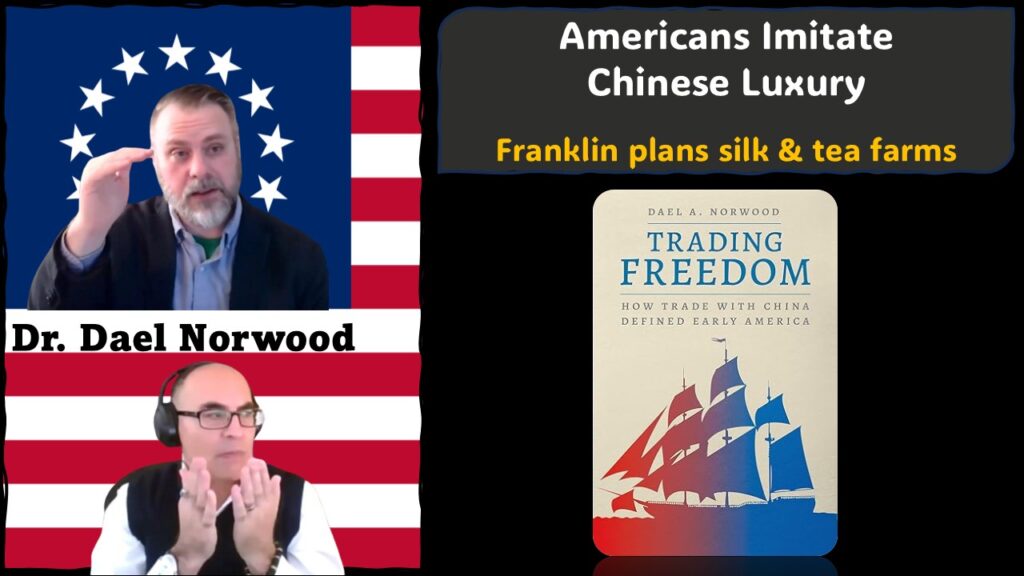 China, Trade, and Consumer Goods in Colonial America
The Dutch
►My interview with Dr. Peter Van Cleave – “The Dutch Dilemma: Supporting the American Revolution”
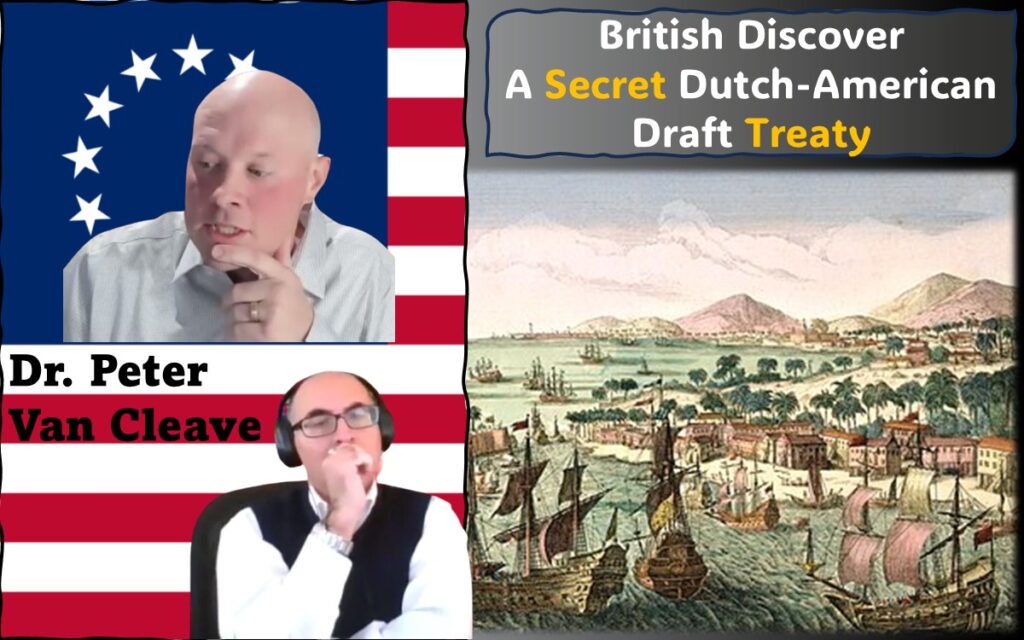 The Dutch and the American Revolution
1776
►My interview Dr. Edward Larson – “1776: Seven Months That Changed America”
 1776 Was More Than a Year of Independency
“Common Sense”
►My interview with Dr. Harvey Kaye – “How Thomas Paine Became Thomas Paine: The Origins of ‘Common Sense’”
 Paine’s Journey: From Corset Maker to Revolutionary Voice
About This Program
Analyzing American Revolution (AAR) is a special series podcast production of the History Behind News program. In this series, 33 professors (and counting) analyze the American Revolution from 33 different angles through in-depth interviews with host Adel Aali.
Meet Our Guest Scholars
A structured body of thought on the American Revolution—where leading scholars advancing distinct interpretations that give this program its depth.

Thematic Collection
Tap below for a closer look at the Revolutionary Era themes we examine—and to meet our guest scholars.

Library
- Interview Transcript Highlights
- Interview Image and Artist Highlights
- Quiz Answers and Backstories

Image Gallery
Explore the backstories and artist bios behind images of our Founding—before and after the American Revolution. These visuals shape how we remember—and reimagine—the Revolutionary Era.

Support AAR
AAR is an independent program built on sustained research, preparation, and production. Your support helps continue this series and expand our program.

Experienced Analysis of History
About HbN Program
The History Behind News program (HbN) is committed to making in-depth history researched and written by scholars enjoyable and accessible to everyone. Our motto is bridging scholarly works to everyday news.
The histories we’ve uncovered encompass an impressively wide range of subjects from ancient history to U.S. politics and economy to race, women’s rights, immigration, climate, science, military, war, China, Europe, Middle East, Russia & Ukraine, Africa and the Americas to many other issues in the news. We also receive advanced copies of scholarly books and discuss them in our program (in the context of current news).

Adel Aali, host. Snapshot from his introductory video to AAR podcast.
232 Scholars & Counting
Our guests are scholars at leading institutions. They are highly recognized, having received prestigious grants and fellowships as well as notable awards, including the Pulitzer Prize. They include celebrated documentary producers, former White House advisors and other high-ranking government officials, and current and former senior reporters of major national and international newspapers. Many have testified in Congressional hearings, and others frequently contribute to major media outlets and widely read publications.
Think You Know the American Revolution?